Sydney-wide wet-area leak detection · Inspections & reports6 days · 1300 863 001
It depends on your policy, but many home insurance policies in Australia cover the cost of locating a leak and the resulting damage when the leak is sudden and accidental — not when it’s gradual wear and tear. A clear leak detection report is often what an insurer needs to assess a claim. Always check your own policy and speak to your insurer.
The distinction most insurers draw is between sudden and accidental damage and gradual deterioration. A pipe that bursts and floods a room is usually treated differently from a shower that’s been slowly leaking for years through perished waterproofing. Many policies will consider the former and exclude the latter — but the wording varies a lot between insurers, so your Product Disclosure Statement (PDS) is the thing that actually governs it.
This is general information, not insurance or legal advice. Your cover depends entirely on your policy — check your PDS and talk to your insurer.
We provide a clear report — location, cause and photo evidence. $299 inc GST for the first hour.
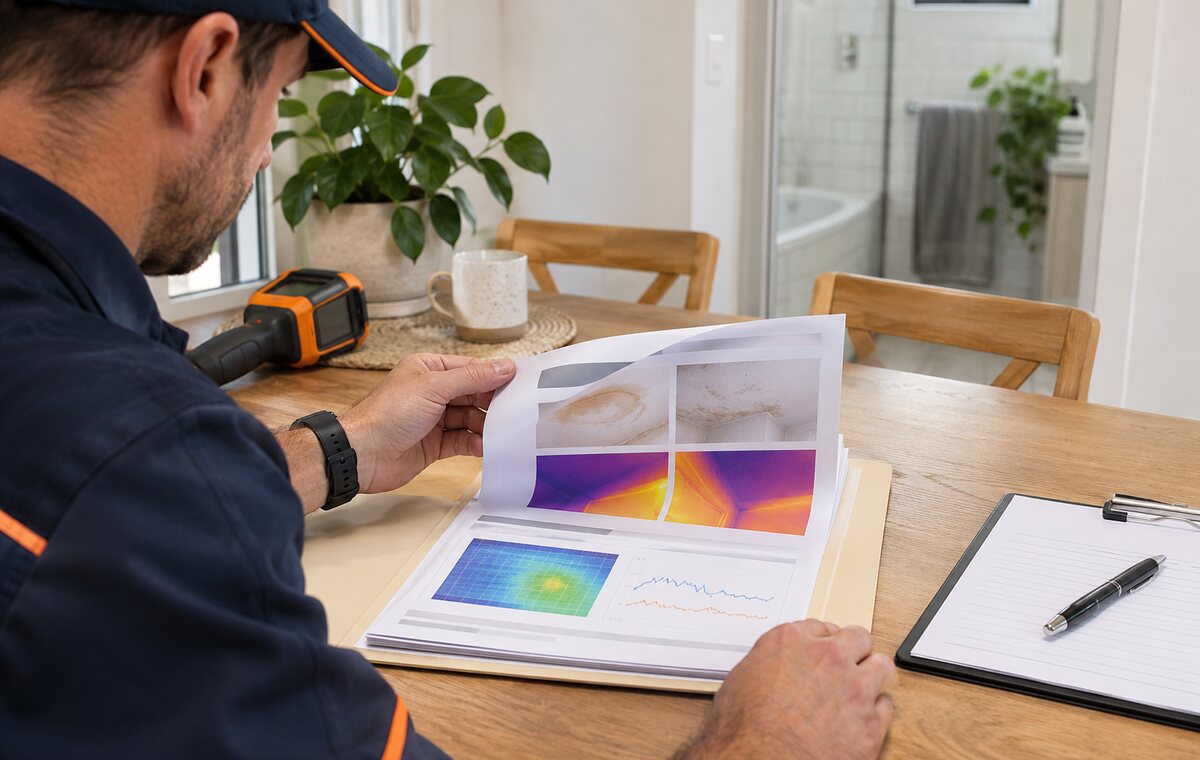
Whatever your policy says, an insurer needs evidence to assess a claim: where the water is coming from, what’s causing it, and proof. That’s exactly what a leak detection report provides — the location, the likely cause, moisture readings and photo evidence, documented clearly. Some policies also cover the reasonable cost of the detection work itself when it’s needed to locate damage.
A few practical steps help:
We often work alongside homeowners, strata managers and insurers at the detection stage, providing the documented findings a claim needs.
Book an inspection and get the documented findings an insurer needs.