Sydney-wide wet-area leak detection · Inspections & reports6 days · 1300 863 001
Look for damp or staining in the room next to the shower or the ceiling below, tiles that sound hollow or lift, grout that keeps going mouldy, and a bathroom that smells musty even when it’s dry. A quick test: keep the floor outside the recess dry, run the shower, and see if moisture appears where it shouldn’t.
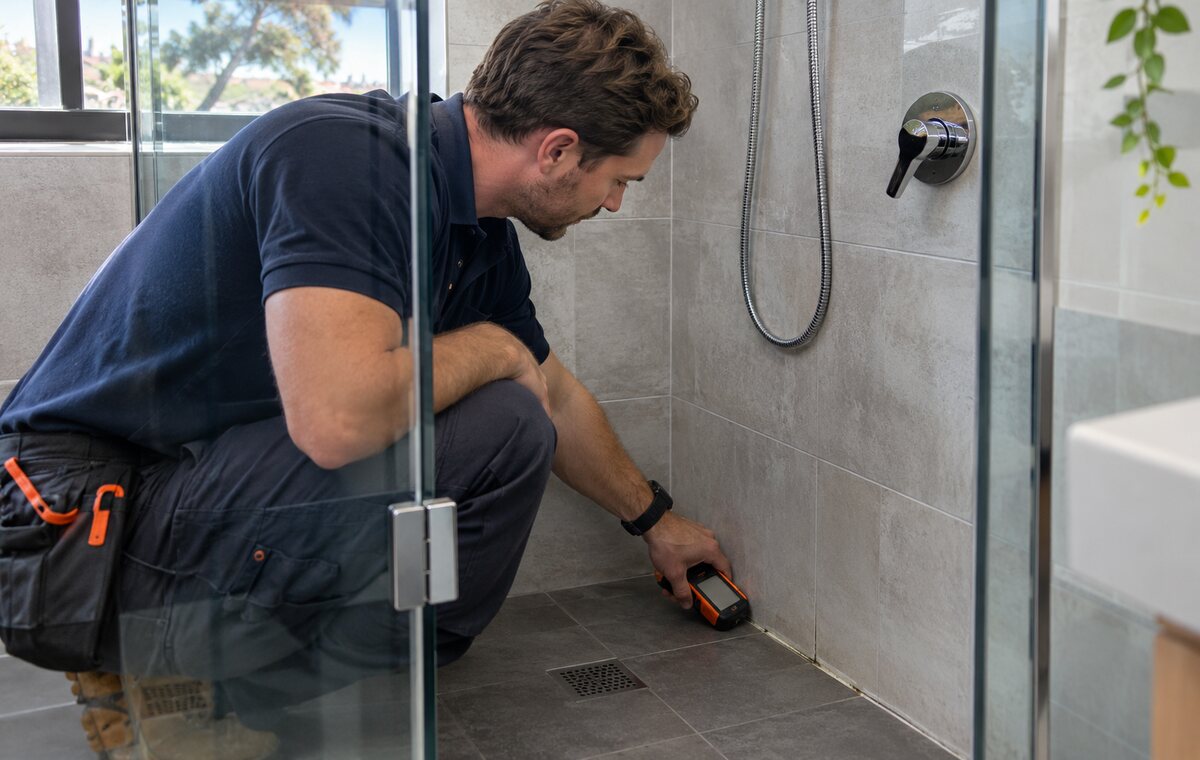
You don’t need equipment to spot the early signs of a leaking shower. Start with what you can see and smell:
For a simple test, dry the floor outside the shower recess, run the shower for ten minutes, and check whether any moisture appears beyond the recess. Water showing up where it shouldn’t is a strong sign the recess isn’t holding water the way it should.
We pinpoint the source without tearing the recess apart. $299 inc GST for the first hour on site.
Some signs only appear once a leak has been quietly running for months:
The longer a shower leaks, the further the water travels and the more it costs to put right — which is why catching it early matters.
Almost every shower leak traces back to one of a few places: a failed or aged waterproofing membrane under the tiles, cracked grout or perished silicone, a leaking hob or screed with poor fall, or a loose fitting like the mixer or floor waste. Telling which one is the actual source is the whole job — and it’s why guessing (and re-tiling the wrong thing) so often fails.
If you’ve got any of the signs above, a professional shower leak detection inspection can pinpoint the exact failure point without lifting a tile, using moisture mapping and thermal imaging.
Book a shower inspection and we’ll give you a clear answer — where it is, why, and what the fix looks like.