Sydney-wide wet-area leak detection · Inspections & reports6 days · 1300 863 001
Home / Insights / Moisture meter: DIY vs professional leak detection
How it works

Moisture meter: DIY vs professional leak detection

A $30 moisture meter is a handy first step, but it has real limits. Here’s what it can tell you, what it can’t, and when it’s worth getting a professional.

4 min read Updated Nov 2026 How it works
Quick answer

A cheap moisture meter can tell you a surface is wet, but not why or where the water is coming from. Professional leak detection adds thermal imaging, calibrated readings and targeted testing to trace the source without demolition — which is the part that actually solves the problem.
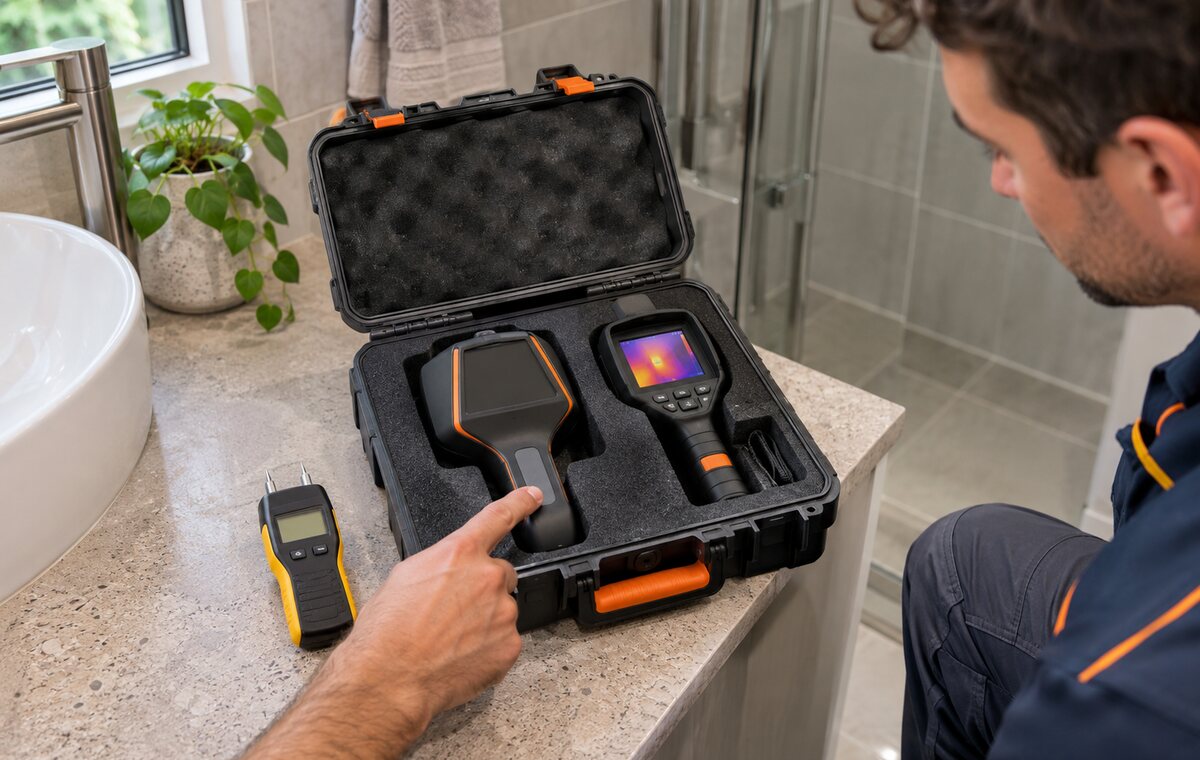
Comparing a DIY moisture meter with professional detection equipment
A DIY meter shows that a surface is wet — not why, or where the water is from.

What a DIY moisture meter can do

An inexpensive pin or pinless moisture meter is genuinely useful for a first look. It can:

  • Confirm that a wall or floor is wetter than the surrounding area.
  • Help you compare two spots to see which is damper.
  • Give you a rough sense of how far a damp patch extends.

If you just want to know whether something is wet, it does the job.

Confirmed it’s wet but don’t know why?

We find the source, not just the symptom. $299 inc GST for the first hour on site.

Book an Inspection

What it can’t do

Where a DIY meter falls short is everything that actually matters for fixing a leak:

  • It can’t tell you where the water is coming from — only that the surface is wet.
  • It reads the surface, not what’s behind tile, render or slab.
  • Cheap meters aren’t calibrated, so readings can mislead on different materials.
  • It can’t distinguish an active leak from rising damp or condensation.

What a professional adds

Professional thermal imaging leak detection combines calibrated moisture mapping with thermal imaging — which reveals the cooler, damp areas behind finished surfaces — and targeted testing to confirm the exact source. The result is the thing a meter can never give you on its own: where the leak is and why, usually without opening anything up.

So a DIY meter is a reasonable way to confirm you have a problem. Once you need to know the source — especially before paying for repairs — that’s where professional detection earns its keep.

Questions, answered

DIY vs professional — FAQs

Are DIY moisture meters accurate?
They’re fine for a rough comparison but aren’t calibrated, so absolute readings can mislead — especially across different materials. They tell you something is wet, not where the water is from.
When should I call a professional?
When you need to know the source — particularly before paying for repairs, or when the damp is behind tile, render or slab where a meter can’t see.
Does professional detection avoid demolition?
In most cases, yes. Thermal imaging and moisture mapping locate the source non-invasively, so opening up is targeted rather than exploratory.

Need to know the source?

Book an inspection and we’ll trace it properly — no demolition to find out.