Sydney-wide wet-area leak detection · Inspections & reports6 days · 1300 863 001
A brown ring on the ceiling under an upstairs bathroom is one of the most common leaks we trace. Here’s what’s actually happening — and why the fix isn’t a tin of paint.
Because the waterproofing in the wet area above has failed and water is tracking down through the floor to your ceiling. The stain is the symptom — the leak itself is in the bathroom, shower or balcony directly above. Painting over it hides the mark but the water keeps arriving, so it comes back.
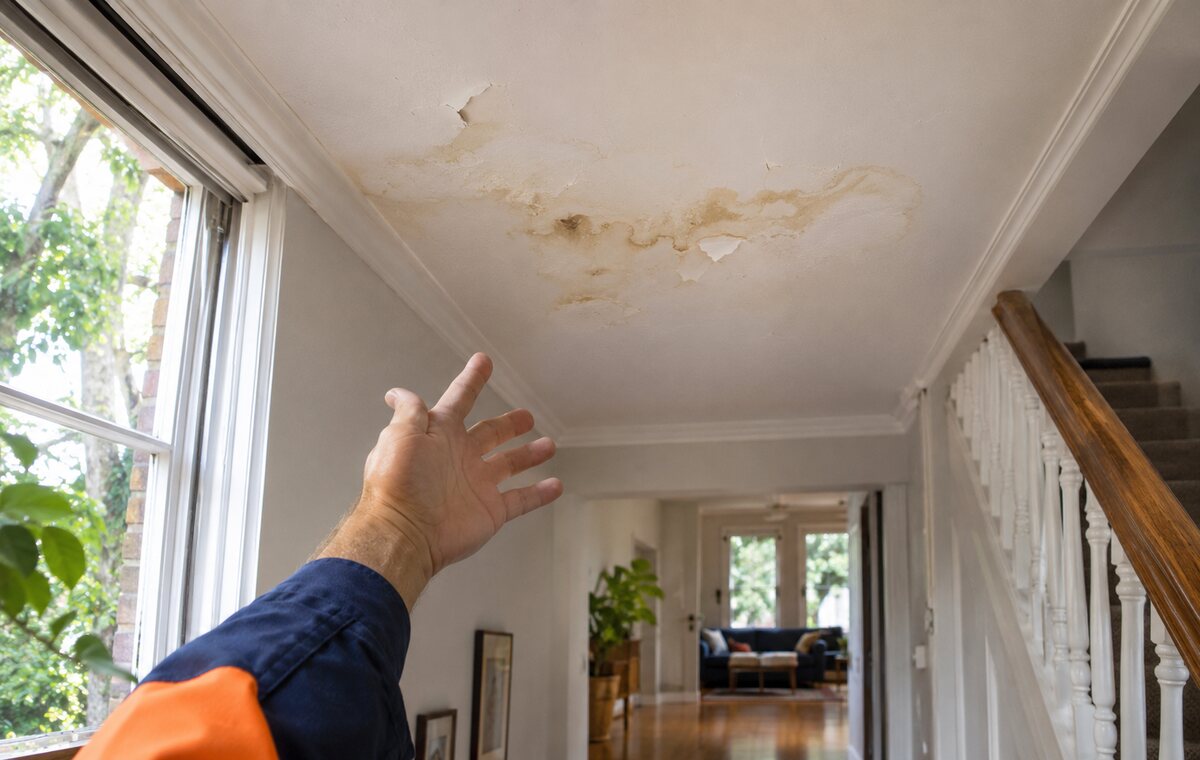
Bathrooms are built to keep water in with a waterproofing membrane under the tiles. When that membrane, the grout or a fitting fails, water escapes the wet area, soaks into the floor structure and follows gravity — running along joists and tracking down until it reaches your ceiling and shows as a stain.
Because water runs along the structure before it drips, the stain is often not directly under the leak. That’s why chasing the mark rarely works and why the source has to be traced properly.
We trace it to the real source above, not just the mark. $299 inc GST for the first hour.
When we trace a ceiling stain upward, it almost always leads to one of these:
Repainting a water-stained ceiling without finding the source is a short-term patch. The water is still arriving, so the stain returns — often bigger — and the longer it runs, the more the plaster, insulation and structure above are damaged. If the ceiling is sagging or bulging, that’s trapped water and a safety risk; keep clear of it and get it looked at.
The fix is to trace the stain back to the exact wet area and failure point above with ceiling leak detection, then repair the real source — after which the ceiling can be made good for good.
Book an inspection and we’ll trace it to the wet area that’s really leaking.